GCWAL's story is not a marketing line. It comes from a long run of work in management development, accreditation, consulting, and practitioner research. The model grew from real client work, then matured through publications, programmes, and long-term relationships with organisations and practitioners.
At the centre of that story are Emeritus Professor Selva Abraham and Dr Param Abraham. Selva shaped the Work-Applied Learning model through research and practice. Param helped build the institutional discipline around it, with a focus on accreditation, quality assurance, and delivery.
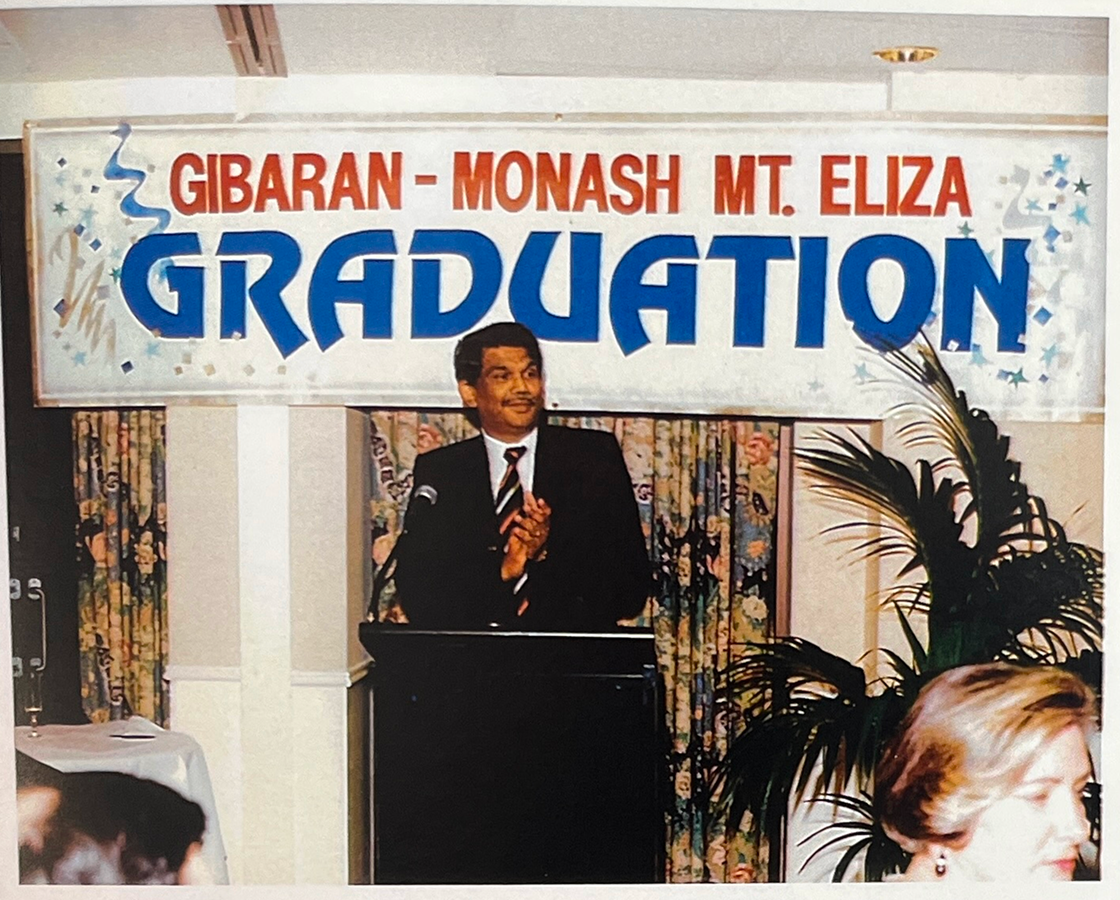 Selva at a Gibaran graduation
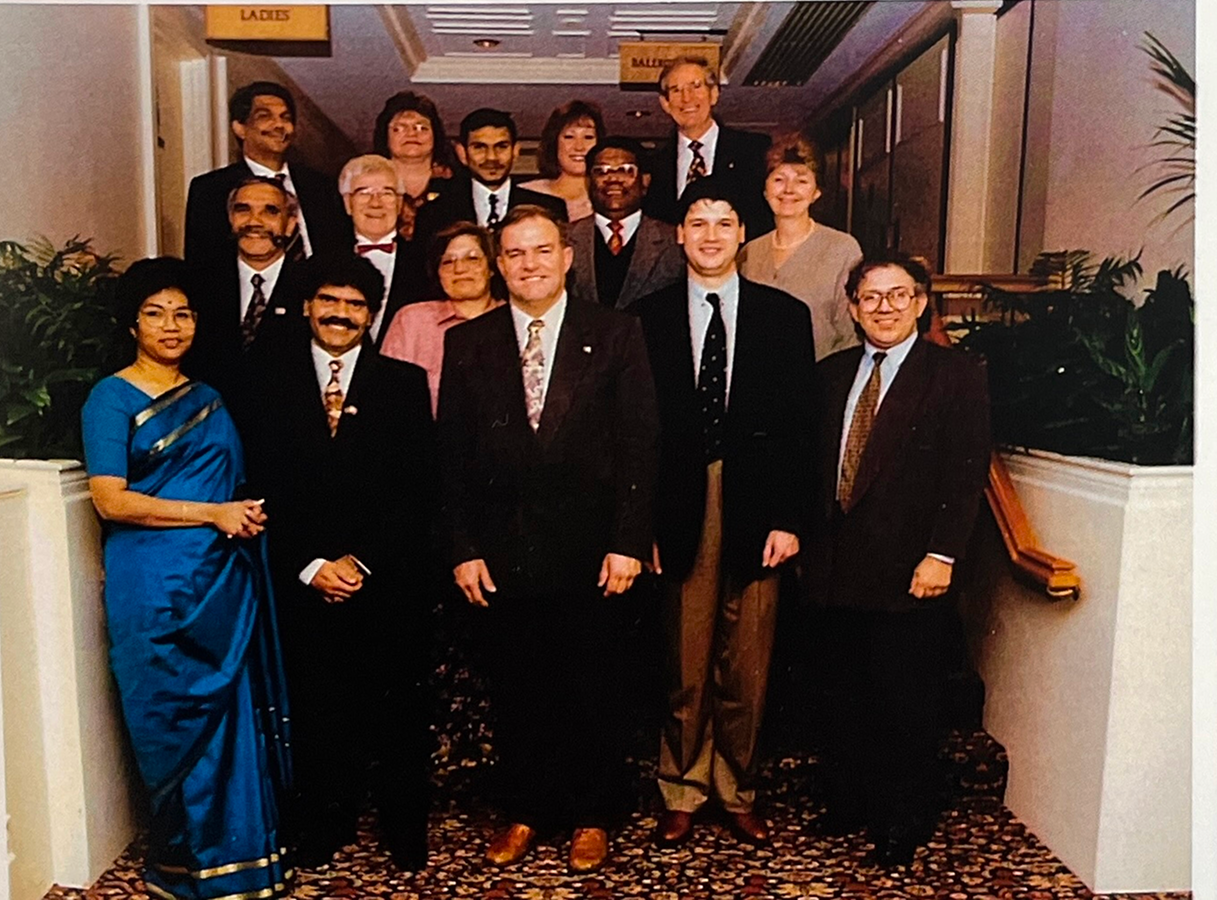 The early Gibaran team
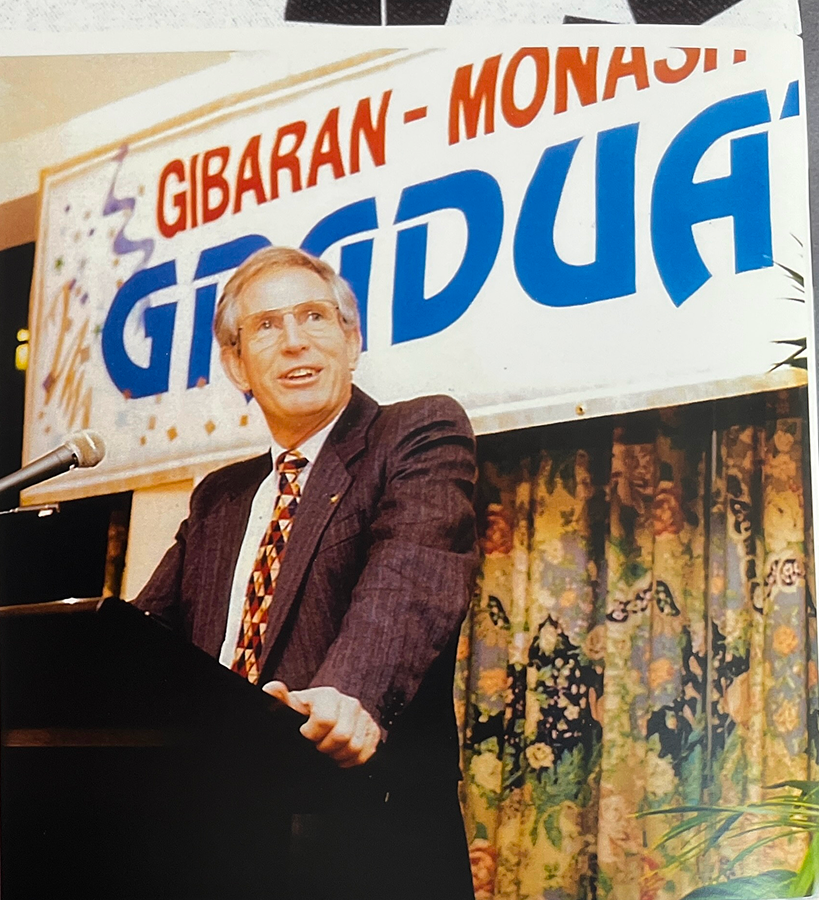 The first generation of graduates
The People Behind WAL
Selva shaped the model. Param helped keep it rigorous and deliverable.
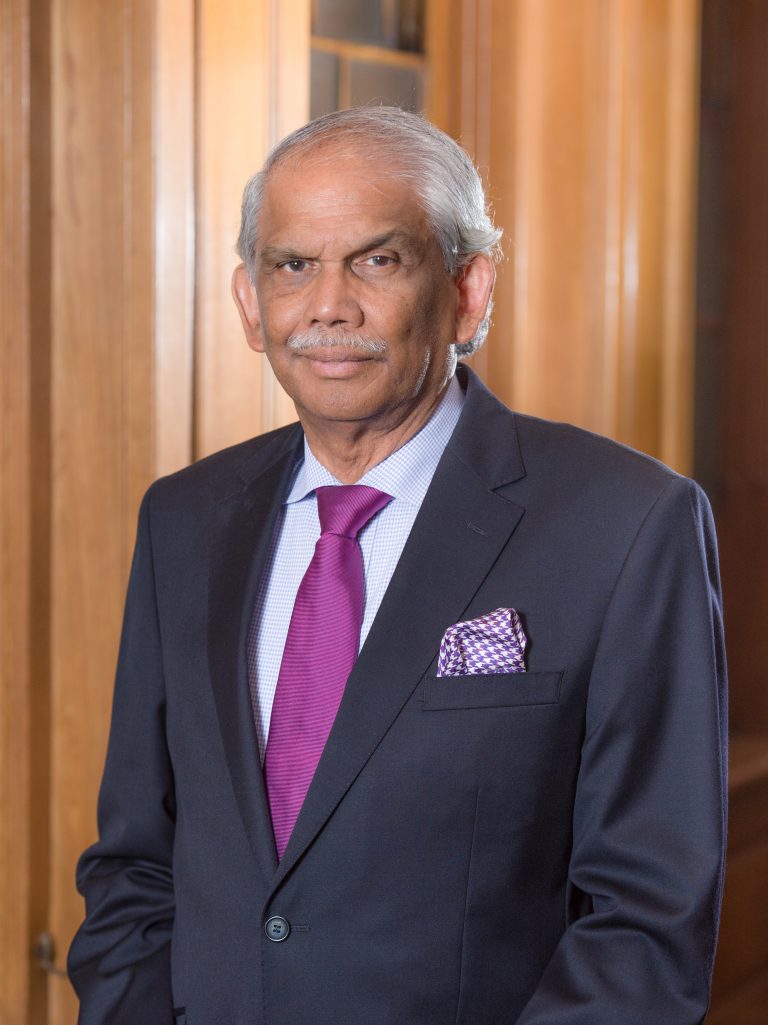
Emeritus Prof Selva Abraham
Emeritus Profressor Selva Abraham is the Founder Chairman of the Global Centre for Work-Applied Learning (GCWAL). He is also the Founder of and Emeritus Professor at the Australian Institute of Business (AIB) and a Visiting Professor at Leeds Trinity University.
Over the last 45 years, his consulting and research focus has been on Work-Based Management Learning, which he extended into the concept of Work-Applied Learning in private, public, and community organisations.
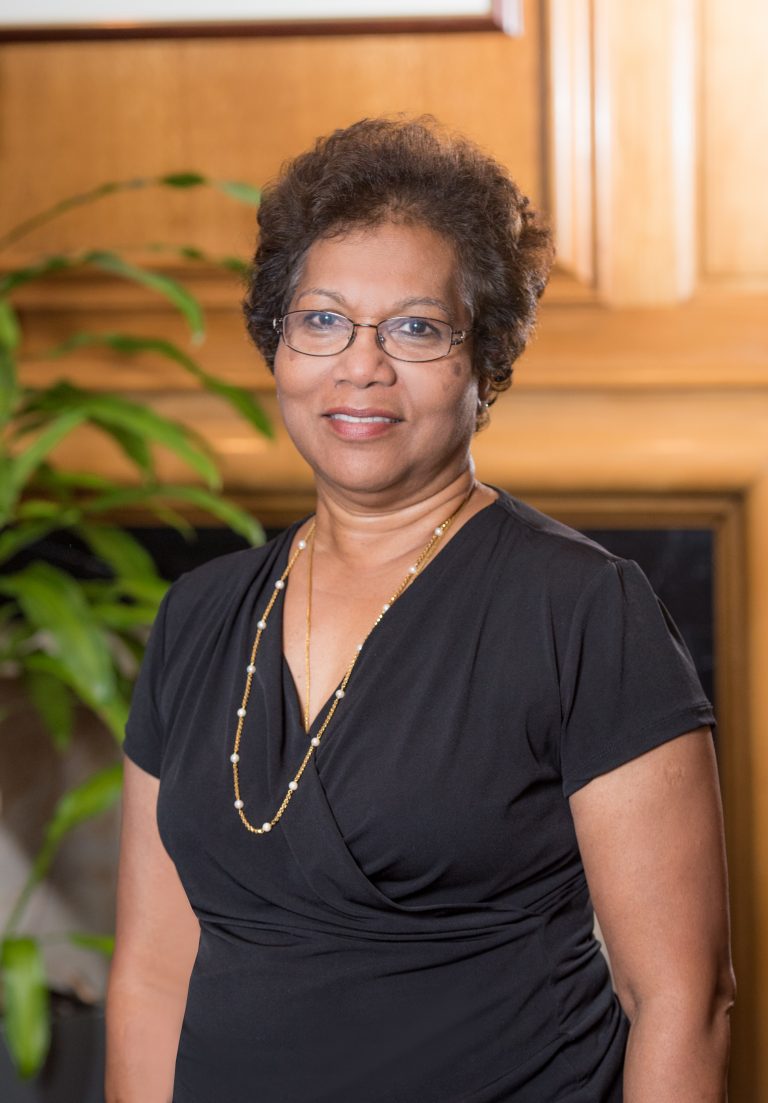
Dr Param Abraham
Param has more than 30 years' experience in accreditation and quality assurance for the Australian Institute of Business and GCWAL, working closely with senior executives and the Board.
Her doctoral research examined the Work-Applied Learning model in the context of developing quality assurance processes in higher education.
How the WAL Change Model Grew
A concise timeline of the work that built the legacy
WBL takes shape
Work-Based Learning programmes began in Singapore and Malaysia, then the work shifted to Perth and the Gibaran consultancy years began. (?? Mount Eliza)
WAL is named
The model became explicitly Work-Applied Learning, keeping the same practical intent while making the framework clearer and more transferable.
Accreditation follows the work
The programmes moved into formal higher education recognition, including graduate, masters, MBA, and doctoral-level pathways.
The journal begins
The Journal of Work-Applied Management gave the model a public research home and connected it to a wider practitioner and academic audience.
AIB emerges from the group
The Gibaran Learning Group consolidated under the Australian Institute of Business, giving the work a clearer public identity while preserving the same applied-learning DNA.
The business is partly sold
With AIB established, 50% of the business was sold. GCWAL then continued as the place where the founders' applied research and WAL work could evolve independently.
GCWAL continues independently
The broader business moved on, but the WAL method and its founder-led legacy continued through GCWAL, with a clearer focus on practitioner learning, research, and licensing.
Proof in Practice
A long record of clients, programmes, and applied research